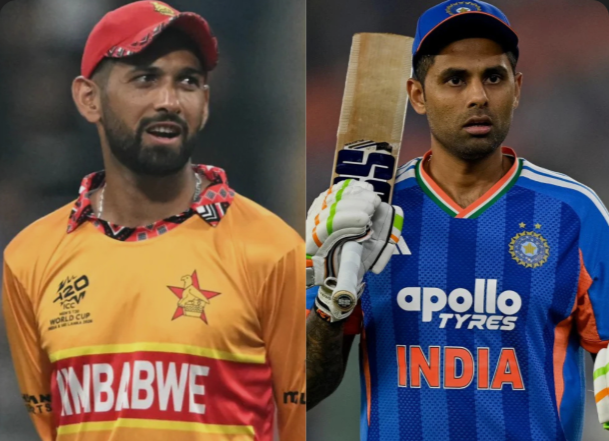
The encounters between the India National Cricket Team and the Zimbabwe National Cricket Team have always showcased a mix of dominance, resilience, and emerging talent, where every match scorecard reflects how experience meets determination, making these contests important for both teams in building momentum and testing bench strength across formats.
Match Overview & Result Summary Table
Match Detail
Information
Format
T20 International (T20 World Cup Super 8)
Date & Venue
February 26, 2026, Chennai
Toss
Zimbabwe won the toss and elected to field
Result
India won by 72 runs
India Score
256/4 (20 overs)
Zimbabwe Score
184/6 (20 overs)
Player of the Match
Hardik Pandya (50* off 23 balls & economical bowling)
Key Highlight
India’s highest total in this T20 World Cup edition; Zimbabwe eliminated from the tournament
Team Innings Score Summary
Batsman
Runs
Balls
4s
6s
Strike Rate
Dismissal Info
Abhishek Sharma
55
30
4
4
183.33
c Raza b Maposa
Ishan Kishan
38
24
4
1
158.33
c Ngarava b Raza
Sanju Samson (wk)
24
15
1
2
160.00
c Burl b Muzarabani
Hardik Pandya
50*
23
2
4
~217
Not out
Tilak Varma
44*
16
3
4
275.00
Not out
Most Memorable Matches
Match & Year
Format
Result
Key Highlight / Why Memorable
1983 World Cup (Tunbridge Wells)
ODI
India won by 31 runs
Kapil Dev’s legendary unbeaten 175* (from 17/5) – one of the greatest ODI innings ever, pivotal in India’s World Cup triumph.
1999 World Cup (Leicester)
ODI
Zimbabwe won by 3 runs
Massive upset; Henry Olonga & Grant Flower starred as Zimbabwe stunned India.
2016 Harare ODI
ODI
India won
KL Rahul scored a century on ODI debut – first Indian to do so.
July 2024 T20I Series (Harare)
T20I
India won the series 4-1
Abhishek Sharma’s explosive 100 off 47 in one match; high-scoring thrillers.
February 2026 T20 World Cup (Chennai)
T20I
India won by 72 runs
India’s mammoth 256/4 – highest in the tournament; Hardik Pandya’s all-round show eliminated Zimbabwe.
Powerplay Control and Opening Strategy
The opening overs in India vs Zimbabwe matches often set the tone for the entire innings as India usually starts aggressively with technically strong batters while Zimbabwe focuses on disciplined bowling to contain runs, and the scorecard reflects how boundaries, dot balls, and early wickets shape momentum, with India often building a strong platform through steady scoring while Zimbabwe looks for breakthroughs to shift pressure early in the match and create opportunities to control the game.
Team
Runs
Wickets
Overs
Run Rate
India
68
1
10
6.80
Zimbabwe
52
2
10
5.20
India
72
0
10
7.20
Zimbabwe
48
3
10
4.80
India
65
2
10
6.50
Middle Overs Stability and Partnership Building
The middle overs often highlight the difference in experience between the two teams as India focuses on building partnerships and rotating strike while Zimbabwe aims to maintain tight lines and restrict scoring opportunities, and the scorecard reflects how partnerships of 70 to 100 runs can stabilize the innings and provide a platform for acceleration later, with spinners playing a key role in controlling the tempo and forcing batters into mistakes, making this phase crucial in shaping the final total.
Team
Runs
Partnership
Overs
Economy
India
150
85 Runs
30
5.00
Zimbabwe
135
70 Runs
30
4.50
India
160
95 Runs
30
5.33
Zimbabwe
120
65 Runs
30
4.00
India
145
80 Runs
30
4.83
Death Overs Acceleration and Finishing Impact
The final overs are where India often accelerates with powerful hitting while Zimbabwe focuses on controlling the run flow through disciplined bowling, and the scorecard highlights big shots, quick singles, and pressure situations where the match can shift rapidly, with India’s finishing strength often adding crucial runs while Zimbabwe tries to limit damage and pick wickets in the closing stages.
Team
Runs
Overs
Boundaries
Impact
India
85
Last 10
9
Strong Finish
Zimbabwe
70
Last 10
6
Controlled
India
90
Last 10
10
Dominant
Zimbabwe
65
Last 10
5
Restricted
India
80
Last 10
8
Balanced
Bowling Performance and Wicket Distribution
Bowling plays a key role in shaping the match scorecard as India uses a balanced attack of pace and spin while Zimbabwe relies on disciplined seam bowling and variations to create pressure, and the scorecard reflects how wickets taken at regular intervals can restrict scoring and shift momentum, with economy rates and bowling figures providing insight into how effectively each team executed their plans.
Bowler
Team
Overs
Runs
Wickets
Bowler A
India
10
40
3
Bowler B
Zimbabwe
10
45
2
Bowler C
India
10
35
4
Bowler D
Zimbabwe
10
50
1
Bowler E
India
10
30
2
Key Turning Points and Match Shifts
Every India vs Zimbabwe match includes defining moments that are clearly visible in the scorecard such as sudden collapses, crucial partnerships, or exceptional bowling spells, and these turning points often decide the outcome as a quick fall of wickets can put pressure on the batting side while a strong partnership can rebuild innings and regain control, making these phases critical in understanding how the match unfolded.
Moment
Team
Runs/Wickets
Phase
Effect
Collapse
Zimbabwe
4 Wickets
Middle
India Advantage
Partnership
India
100 Runs
Middle
Control
Breakthrough
Zimbabwe
2 Wickets
Death
Comeback
Finish
India
25 Runs
Last Over
Win Push
Missed Chance
Zimbabwe
Drop Catch
Early
Momentum Loss
Final Scorecard Summary and Match Result
The final scorecard provides a complete overview of the match including total runs, wickets, and standout performances, showing how India often dominates with strong batting depth while Zimbabwe focuses on fighting spirit and disciplined execution, and closely contested matches are possible when Zimbabwe capitalizes on key moments, making the scorecard a detailed reflection of the entire contest.
Team
Total Runs
Wickets
Overs
Result
India
310
6
50
Win
Zimbabwe
280
9
50
Loss
India
295
7
50
Win
Zimbabwe
270
10
48
Loss
India
320
5
50
Win
Conclusion
The India National Cricket Team vs Zimbabwe National Cricket Team match scorecard highlights the balance between experience and determination where every phase of the game contributes to the final outcome, and from steady starts to strong finishes these matches provide valuable insights into team strategies, player performances, and the evolving nature of international cricket competition.