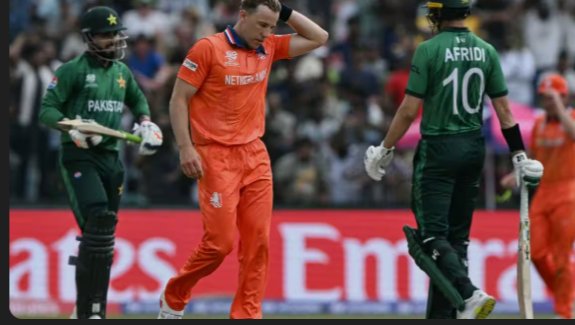
Pakistan National Cricket Team Vs Netherlands National Cricket Team Matches
Table of Contents
The rivalry between Pakistan National Cricket Team and Netherlands National Cricket Team is a story of contrast, growth, and evolving competition. What began as a clear mismatch between an established cricketing powerhouse and an emerging associate nation has gradually transformed into a contest filled with learning, resistance, and moments of surprise. Through multiple encounters across formats and tournaments, the scorecards reflect dominance, but the deeper narrative reveals determination from the Netherlands and consistency from Pakistan. Each match adds a new layer, blending experience with ambition and shaping a rivalry that continues to develop on the global stage.
Latest Matches
Tournament
Venue
Date
Toss
Pakistan Score
Netherlands Score
Result
Series
Player of the Match
ICC Men’s T20 World Cup 2026 (Group A)
Sinhalese Sports Club, Colombo
Feb 7, 2026
Pakistan (field)
148/7 (19.3 overs)
147 (19.5 overs)
Pakistan won by 3 wkts
T20 World Cup
Faheem Ashraf (PAK)
ICC Cricket World Cup 2023
Rajiv Gandhi Intl. Stadium, Hyderabad
Oct 6, 2023
Netherlands (field)
286 (49 overs)
205 (41 overs)
Pakistan won by 81 runs
ODI World Cup
Saud Shakeel (PAK)
ICC Men’s T20 World Cup 2022
Perth Stadium, Perth
Oct 30, 2022
Netherlands (bat)
95/4 (13.5 overs)
91/9 (20 overs)
Pakistan won by 6 wkts
T20 World Cup
Shadab Khan (PAK)
Bilateral ODI
Hazelaarweg Stadion, Rotterdam
Aug 21, 2022
Pakistan (bat)
206 (49.4 overs)
197 (49.2 overs)
Pakistan won by 9 runs
Bilateral ODI
Naseem Shah (PAK)
Bilateral ODI
Hazelaarweg Stadion, Rotterdam
Aug 18, 2022
Netherlands (bat)
191/3 (33.4 overs)
186 (44.1 overs)
Pakistan won by 7 wkts
Bilateral ODI
Mohammad Nawaz (PAK)
Bilateral ODI
Hazelaarweg Stadion, Rotterdam
Aug 16, 2022
Pakistan (bat)
314/6 (50 overs)
298/8 (50 overs)
Pakistan won by 16 runs
Bilateral ODI
Fakhar Zaman (PAK)
All-Time Head-to-Head Record
Format
Total Matches
Pakistan Won
Netherlands Won
No Result/Tie
ODI (One-Day International)
7
7
0
0
T20I (Twenty20 International)
3
3
0
0
Total
10
10
0
0
All-Time Batting Leaders
Rank
Player
Team
Matches
Runs
Average
Highest Score
1
Babar Azam
PAK
3
222
74.00
91
2
Tom Cooper
NED
3
193
64.33
66
3
Fakhar Zaman
PAK
3
138
46.00
109
4
Vikramjit Singh
NED
3
116
38.67
65
5
Bas de Leede
NED
3
110
36.67
89
All-Time Bowling Leaders
Rank
Player
Team
Matches
Wickets
Best Bowling
Economy
1
Naseem Shah
PAK
3
10
5/33
4.26
2
Waqar Younis
PAK
3
7
4/26
2.56
3
Haris Rauf
PAK
3
9
3/16
4.83
4
Mohammad Wasim
PAK
3
6
4/36
4.87
5
Bas de Leede
NED
4
9
4/62
5.20
When an Associate Nation Faced a Giant for the First Time
When Pakistan National Cricket Team first met Netherlands National Cricket Team on the international stage, it felt like two completely different cricketing worlds colliding. Pakistan, rich in history, talent, and global success, entered the contest with confidence and authority, while the Netherlands stepped in with determination and the hunger to prove themselves. The early encounters clearly reflected the gap in experience, as Pakistan’s bowlers exploited conditions with precision and their batters built innings with composure. Yet, beneath the surface, there was a quiet resilience in the Dutch side. Every run scored and every wicket taken carried meaning beyond the scoreboard. For Netherlands, it was not just a match, it was an opportunity to learn, adapt, and grow against elite competition. For Pakistan, it was about maintaining dominance while respecting the spirit of an emerging team. These first meetings laid the foundation of a rivalry shaped by contrast, ambition, and gradual evolution.
Match Aspect
Pakistan Performance
Netherlands Performance
Key Highlight
Batting Strength
Strong top order
Struggled early
Solid partnerships by Pakistan
Bowling Impact
Disciplined attack
Inconsistent spells
Early wickets by Pakistan
Experience Level
Highly experienced
Developing side
Clear gap in match awareness
Fielding Standard
Sharp and agile
Occasional errors
Missed chances proved costly
Match Outcome
Dominant wins
Learning phase
Pakistan controlled games
Early Encounters That Defined the Power Imbalance
The early meetings between Pakistan National Cricket Team and Netherlands National Cricket Team firmly established the narrative of dominance and disparity. Pakistan entered these matches with a settled lineup, experienced campaigners, and a deep understanding of pressure situations, while the Netherlands were still finding their footing at the highest level. Scorecards from these encounters often told a one-sided story, with Pakistan posting competitive totals and then dismantling the Dutch batting lineup with disciplined bowling. Their pace attack generated movement and bounce, while spinners controlled the middle overs with ease. For the Netherlands, these games were tough lessons. Batting collapses were frequent, and partnerships were hard to build against a relentless bowling unit. Yet, even in defeat, there were glimpses of promise, a stubborn lower-order stand or a bowler producing a breakthrough spell. These early contests were not just about results; they highlighted the gap in cricketing maturity, tactical awareness, and execution, setting the tone for how the rivalry would evolve in the years to come.
Match Aspect
Pakistan Edge
Netherlands Challenge
Key Insight
Batting Depth
Long and reliable
Fragile middle order
Pakistan built bigger totals
Bowling Quality
Varied and consistent
Lacked penetration
Struggled to defend or contain
Game Awareness
Strong tactical control
Learning under pressure
Key moments favored Pakistan
Partnerships
Frequent big stands
Rare long partnerships
Momentum stayed with Pakistan
Overall Outcome
Comfortable victories
Competitive in patches
Gap clearly visible in results
ICC Tournaments Where Pressure Elevated the Contest
When Pakistan National Cricket Team and Netherlands National Cricket Team crossed paths in ICC events, the atmosphere shifted instantly. These were no longer routine fixtures but global-stage battles where every run and every wicket carried weight. Pakistan, despite being the stronger side on paper, often entered these matches with the burden of expectation, knowing that any slip could become a headline. The Netherlands, on the other hand, played with freedom, using the big stage as a chance to challenge reputations. In several encounters, the scorecard revealed tighter contests than expected. Pakistan’s top order occasionally faced early breakthroughs, forcing their middle order to rebuild under pressure. Meanwhile, the Dutch bowlers showed improved discipline, sticking to plans and exploiting conditions smartly. Moments like a sudden collapse, a crucial partnership, or a game-changing spell added tension to these clashes. While Pakistan still managed to control most outcomes, these ICC meetings highlighted a growing competitiveness, where pressure began to blur the gap and made every contest more gripping than before.
Tournament Aspect
Pakistan Approach
Netherlands Approach
Key Moment
Pressure Handling
Experienced but tested
Fearless and motivated
Early wickets created tension
Batting Under ICC
Occasional struggles
More disciplined
Middle-order rebuilds
Bowling Strategy
Structured plans
Improved execution
Tight spells from Dutch bowlers
Fielding Impact
Reliable overall
Energetic efforts
Key run-outs and saves
Match Intensity
High expectations
Opportunity-driven
Closer games than earlier meetings
Netherlands’ Growth and the Signs of Resistance
Over time, the gap between Pakistan National Cricket Team and Netherlands National Cricket Team began to narrow, not dramatically, but noticeably enough to change the tone of their encounters. The Netherlands evolved from a side struggling to compete into a unit capable of resisting pressure and extending contests deeper than before. Their batting lineup started showing patience, with top-order players focusing on building partnerships rather than surviving spells. In several matches, the Dutch batters managed to cross competitive totals, forcing Pakistan to rethink their approach. On the bowling front, discipline improved significantly. Instead of relying on occasional breakthroughs, the Netherlands began executing consistent lines and lengths, making scoring harder during crucial phases. Fielding, too, became sharper, turning half-chances into opportunities. These improvements did not always translate into victories, but they brought respect and unpredictability into the rivalry. Pakistan still held the upper hand, yet they could no longer afford complacency. The Netherlands had found their voice, and with it came the first real signs of resistance.
Match Aspect
Earlier Phase
Improved Netherlands Side
Key Change
Batting Approach
Defensive survival
Calculated partnerships
Better run-building ability
Bowling Execution
Inconsistent
More disciplined
Controlled scoring phases
Fielding Standard
Basic efforts
Agile and proactive
More wickets through fielding
Match Competitiveness
One-sided contests
Extended close phases
Games lasted longer in balance
Team Confidence
Limited belief
Growing self-assurance
Stronger intent under pressure
Tactical Battles Between Experience and Fearless Cricket
As the rivalry evolved, matches between Pakistan National Cricket Team and Netherlands National Cricket Team began to reflect a fascinating clash of cricketing philosophies. Pakistan relied on structure, experience, and calculated decision-making, building their innings patiently and deploying bowlers in well-planned spells. Their captains often controlled the tempo with smart field placements and timely bowling changes. In contrast, the Netherlands embraced a fearless brand of cricket. Their batters were willing to take risks early, trying to disrupt Pakistan’s rhythm, while their bowlers focused on variation rather than predictability. This contrast created intriguing tactical moments. There were phases where Pakistan’s discipline slowed the game down, followed by bursts of aggressive counterattacks from the Dutch side. Fielding positions became more attacking, and momentum often shifted within a few overs. These contests were no longer just about skill but about decision-making under pressure. Experience still gave Pakistan the edge, but Netherlands’ fearless intent ensured that every match carried uncertainty and strategic depth.
Tactical Element
Pakistan Strategy
Netherlands Strategy
Match Impact
Batting Approach
Controlled and steady
Aggressive and fearless
Momentum swings in phases
Bowling Plans
Structured spells
Variation and surprise
Unpredictable scoring patterns
Field Placements
Calculated positioning
Attacking intent
Created wicket opportunities
Game Tempo
Slowing pressure moments
Accelerating key phases
Shifting match control
Decision Making
Experience-driven
Instinctive and bold
Tactical battles shaped outcomes
Matches Where Momentum Briefly Shifted
Even in a rivalry largely controlled by Pakistan National Cricket Team, there were moments when Netherlands National Cricket Team managed to tilt the game, if only briefly, and force a rethink. These were the matches where the scorecard did not tell the full story at first glance. A sudden top-order collapse from Pakistan, triggered by disciplined Dutch seam bowling, would inject belief into the contest. At times, Netherlands built surprising partnerships, frustrating Pakistan’s bowlers and stretching the game deeper than expected. The energy on the field shifted quickly in these phases. Pakistan, usually calm and composed, found themselves under pressure, recalibrating strategies mid-innings. However, what often separated the two sides was Pakistan’s ability to recover. A stabilizing partnership or a decisive spell would bring them back into control. For Netherlands, these moments were invaluable. They proved that momentum could be seized, even against stronger opposition. Though the final results often favored Pakistan, these brief shifts added drama, tension, and a sense of unpredictability that enriched the rivalry.
Match Phase
Momentum Shift Trigger
Netherlands Impact
Pakistan Response
Early Overs
Quick wickets
Built early pressure
Rebuilt through partnerships
Middle Overs
Tight bowling spells
Slowed scoring rate
Rotated strike and stabilized
Batting Collapse
Sudden wickets
Gained confidence
Counterattacked to recover
Key Partnerships
Unexpected stands
Extended competitiveness
Broke partnerships at crucial time
Final Outcome
Temporary advantage
Moral victories gained
Regained control to win matches
Star Players Who Shaped Pakistan vs Netherlands Matches
Every rivalry, no matter how one-sided it may appear, is ultimately defined by the players who step up and leave a mark. In matches between Pakistan National Cricket Team and Netherlands National Cricket Team, several individuals have shaped the narrative with performances that stood out beyond the final scorecards. For Pakistan, players like Babar Azam brought class and consistency at the top, anchoring innings with composure, while Shaheen Afridi used pace and swing to dismantle batting lineups early. All-round contributions from players such as Shadab Khan added balance, turning games in crucial moments. On the Netherlands side, fighters like Scott Edwards provided resistance with the bat, often holding innings together under pressure, while Bas de Leede emerged as a key all-rounder capable of influencing both departments. Bowlers like Paul van Meekeren delivered spirited spells that tested Pakistan’s depth. These players did more than perform, they brought identity to the contest. Their efforts added intensity, created memorable moments, and ensured that each encounter carried individual brilliance alongside team rivalry.
Player Role
Pakistan Key Player
Netherlands Key Player
Impact on Matches
Top Order Batter
Babar Azam
Scott Edwards
Anchored innings under pressure
Fast Bowler
Shaheen Afridi
Paul van Meekeren
Early breakthroughs
All-Rounder
Shadab Khan
Bas de Leede
Balanced performances
Middle Order
Mohammad Rizwan
Max O’Dowd
Stability in crucial phases
Game Changers
Multiple match-winners
Emerging match influencers
Defined key match moments
Record-Breaking Performances and Statistical Highlights
Matches between Pakistan National Cricket Team and Netherlands National Cricket Team may not always have produced nail-biting finishes, but they have certainly delivered notable statistical moments that reflect the nature of the contest. Pakistan’s dominance is evident in several scorecards, with top-order batters registering commanding centuries and building large partnerships that set the tone early. Players like Babar Azam have played innings marked by control and consistency, often anchoring totals that proved difficult to chase. On the bowling side, spells from Shaheen Afridi and other pacers highlighted Pakistan’s ability to strike early and break momentum. For the Netherlands, milestones came in the form of resilient individual performances. Contributions from Bas de Leede and Scott Edwards showcased their ability to compete at the highest level, even under pressure. There were also moments of record partnerships and crucial lower-order runs that added respectability to totals. These statistical highlights do more than fill the record books, they tell the story of a growing contest where individual brilliance continues to shape the evolving rivalry.
Record Category
Pakistan Achievement
Netherlands Achievement
Match Significance
Highest Team Total
Consistently 250 plus scores
Competitive improving totals
Pakistan set strong benchmarks
Best Individual Score
Top-order centuries
Fighting half-centuries
Anchors defined innings
Best Bowling Figures
Early wicket spells
Breakthrough performances
Momentum shifts created
Key Partnerships
Big opening stands
Crucial middle-order stands
Stability vs resistance
Milestone Moments
Dominant match finishes
Individual breakthroughs
Growth of competitive spirit
Conclusion
As the journey between Pakistan National Cricket Team and Netherlands National Cricket Team progresses, the rivalry stands as a testament to cricket’s expanding reach and competitive spirit. Pakistan’s strength and experience have largely defined results, yet the Netherlands’ steady improvement has added intrigue and unpredictability. From one-sided beginnings to more competitive encounters, the evolution is clear in both performances and scorecards. This rivalry is no longer just about outcomes, but about growth, resilience, and the promise of tighter contests in the future as the gap continues to narrow.